Self-Hosting
A decade of self-hosting — from shared hosting to Cloudron
Last updated:
Why Self-Host?
I’ve been self-hosting for over a decade. It started as a learning exercise — self-hosting requires real technical skills: managing servers, domains, TLS certificates, backups, databases, email delivery. I wanted to gain those skills by doing it for myself, not just reading about it.
Before self-hosting, I was on shared hosting running WordPress. Then I discovered Yunohost and spent a few years using it for non-production apps, learning how to manage a self-hosted platform. It was a great introduction, but when I needed something more robust for production use, I moved to Cloudron.
That was about ten years ago. Since then, my setup grew — first for myself, then for a few friends, and eventually I started helping others set up their own Cloudron instances and move to self-hosting.
Why Cloudron
I settled on Cloudron because I wanted a robust system that handles the hard parts: domain management, email (SMTP, DKIM, SPF, DMARC), TLS certificates, automated backups, and app upgrades — all from a single dashboard. For this, Cloudron is the best around.
I’ve also contributed back to the ecosystem by packaging three apps for Cloudron:
- Funkwhale — music streaming server (now adopted by the Cloudron team and in the official app store)
- Indiekit — the engine that powers this blog
- FeedLand — Dave Winer’s feed reader
Soon, Cloudron is introducing community app stores, which means even more apps will land in the ecosystem from community packagers.
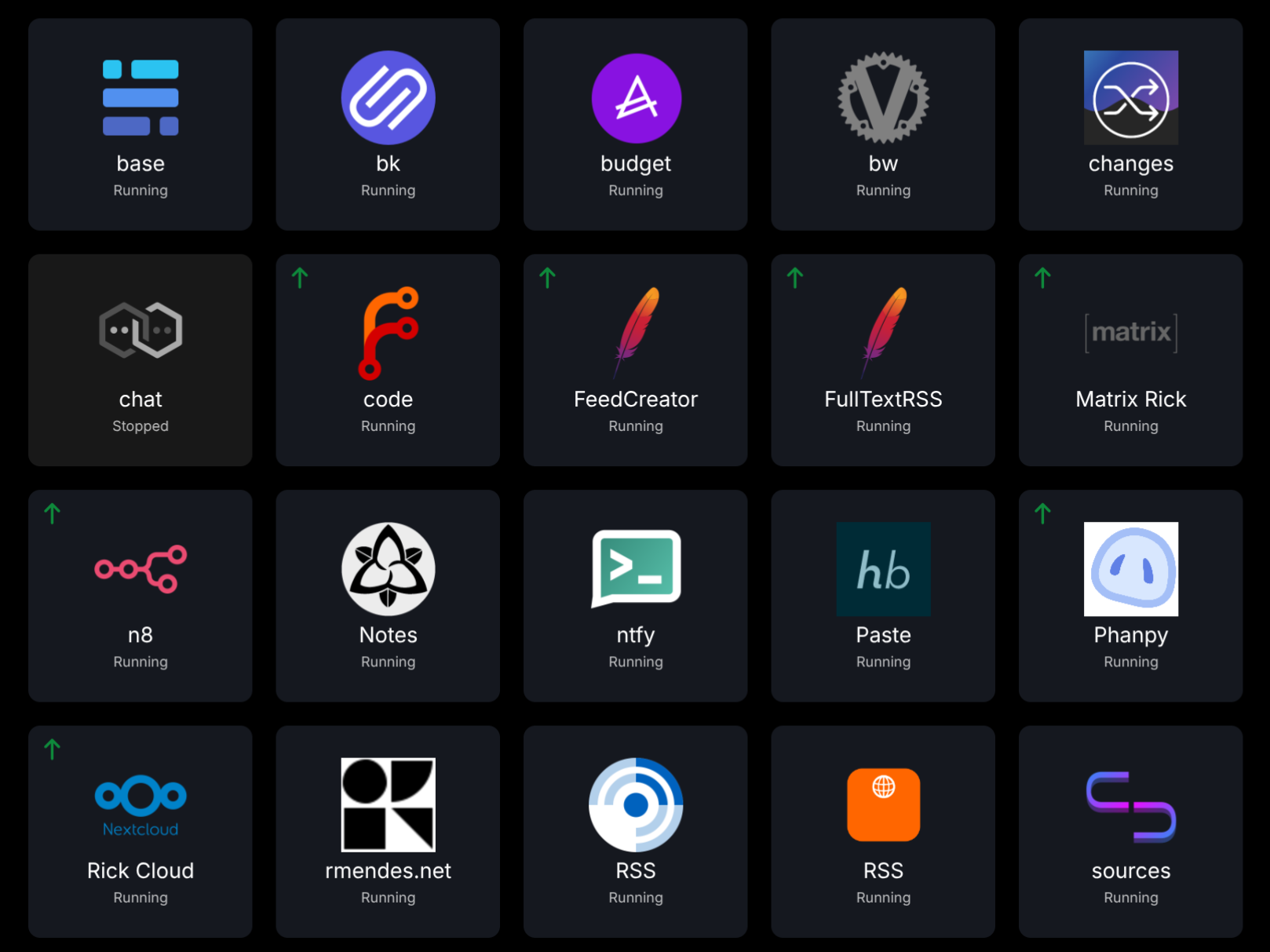
What I Run
IndieWeb & Publishing
- Indiekit — this blog, with 30+ custom plugins, ActivityPub federation, Micropub, and more
- FreshRSS — RSS reader, also powers the blogroll and podroll
- RSS Bridge — generates RSS feeds for sites that don’t have them
- FeedLand — Dave Winer’s social feed reader
- Phanpy — a beautiful Mastodon web client
Productivity & Files
- Nextcloud — files, calendar, contacts (my Google Drive replacement)
- Trilium — notes (though Obsidian has taken over for daily use)
- Linkding — bookmark manager
- Hastebin — quick paste/snippet sharing
Communication
- ntfy — push notifications to all my devices
- The Lounge — IRC client (currently stopped)
Development
- Forgejo — Git forge for private repos and mirrors
- Postiz — social media management
Screenshot of my Cloudron dashboard