Peace Without Accountability Is Not Peace
The Dalai Lama’s message calls for peace, compassion, and dialogue.
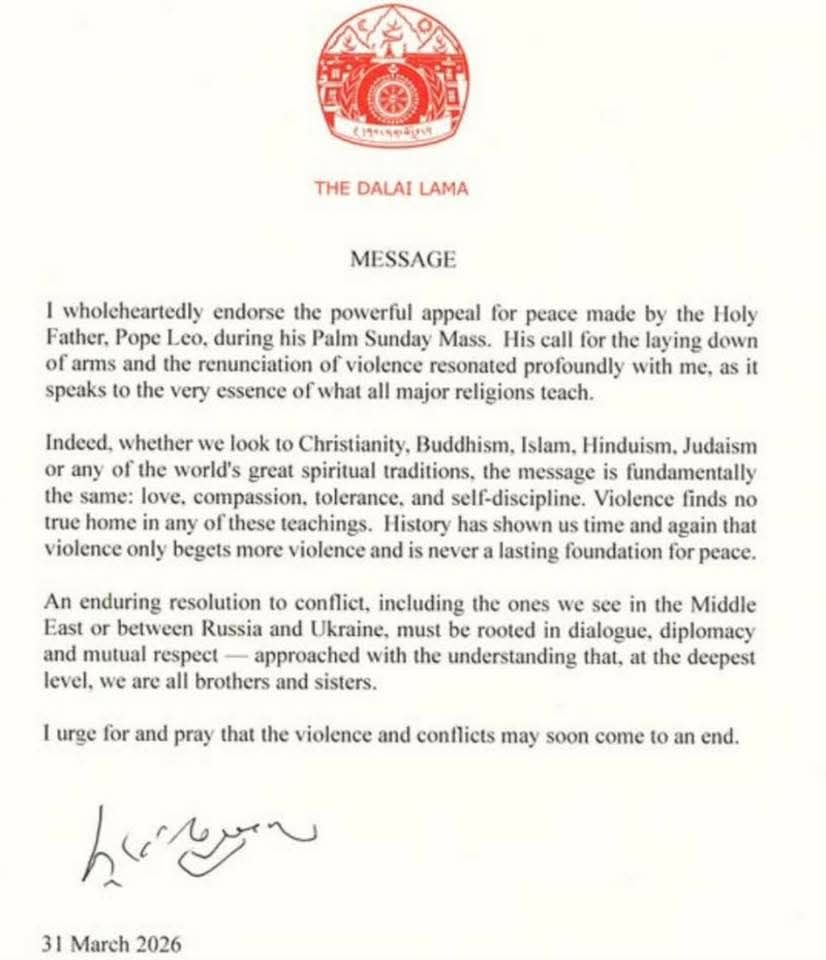
On the surface, it is hard to disagree with any of that.
But there is a deeper problem in how this message is framed.
By grouping together vastly different situations under the single word “conflict,” the letter flattens reality. It creates a sense of symmetry where there is none. Not all violence is equal.
Not all actors carry the same responsibility. Not all sides have the same power. An invasion is not the same as resistance. Occupation is not the same as survival. State violence is not the same as the violence it produces in response.
When these differences are erased, accountability disappears with them.
Calls for “peace on all sides” can sound reasonable, but they often function as a form of moral equivalence.
They turn situations shaped by domination, colonial history, and geopolitical power into abstract disagreements between “brothers and sisters.” That framing may be comforting, but it is not accurate, and it is not neutral.
Compassion that refuses to name responsibility is not compassion. It is avoidance.
These are not simply interpersonal conflicts that can be resolved through mutual understanding. They are structured systems of power, with clear asymmetries, clear histories, and in many cases, clear aggressors.
Language matters here. When we replace words like invasion, occupation, or state violence with softer, universal terms like “conflict” and “violence,” we are not just simplifying. We are reshaping reality. We are making power invisible.
And when power becomes invisible, it becomes unaccountable.
Yes, calls for peace from religious figures may resonate with those who look to moral authority. But moral authority without clarity can dilute responsibility rather than confront it.
I do not need a religious authority to tell me that war is wrong.
And I do not need a universal message of “compassion” that avoids naming who is responsible for it.
Peace is not built on abstraction. It is built on truth, accountability, and the courage to name things as they are.

Comments
Sign in with your website to comment:
Loading comments...
No comments yet. Be the first to share your thoughts!