Blog
All posts including articles and notes. (2827 total)
-
Just updated the #indiekit demo site https://indiekit-demo.rmendes.net
- Github activity now appears as Articles
- Github PRs, Issues, Discussions display properly on the widget
The post feature from github is powered by N8N:
- Github API --> RSS --> indiekit-endpoint-rss --> Micropub -> Indiekit post -
Mais quel drôle d’idée ☀️ #avions #bruxelles
-
Rejoins le mouvement de la seconde main et découvre des milliers de livres à des prix défiants toutes concurrence 📚😁 https://bookvillage.app
-
Autistici/Inventati (A/I), is an Italian collective that has been providing digital infrastructure – email, hosting, mailing lists, chat, videoconferencing, streaming, and services related to privacy and anonymity – to movements and activists since 2001.
On August 26, Washington designated it as a Specially Designated Global Terrorist (SDGT), alleging that it has provided financial, material or technological support to terrorism and to organizations already subjected to sanctions.
Meanwhile the global far-right/neofascist militias are freely organizing and building the digital infrastructure to be the armed wing of democratically elected authoritarian regimes sponsored by nihilistic billionaires.
-
Testing if my double-post #bluesky bug is solved ?
-
What are the difference between my indiekit-syndicator-bluesky fork and upstream core package ?
@rmdes/indiekit-syndicator-bluesky was cut from @indiekit/syndicator-bluesky around February 2026 and has since roughly doubled in size — about 1,050 lines against upstream’s 620 — while gaining no upstream commits back.
Upstream remains a deliberately minimal syndicator: it posts notes and photos, natively likes and reposts Bluesky URLs, and silently declines anything else, returning undefined for likes or reposts of non-Bluesky links.
The fork’s entire reason for existing is that last case: it turns external likes, reposts, and bookmarks into real Bluesky posts carrying an Open Graph link card, fetching the card metadata itself with jsdom and synthesising an SVG-to-PNG thumbnail through sharp when the target page has no OG image.
On top of that it adds reply threading (in-reply-to → resolveReplyRef(), which upstream has no equivalent for), quote-post and recordWithMedia embeds, manual link facets so anchor text in HTML content stays clickable, and an own-domain-aware URL extractor that decides whether the OG card should show an external link or the post’s own permalink.
Upstream, meanwhile, has not stood still: it added a includeCategories option that renders JF2 categories as trailing hashtags, moved to @atproto/api 0.20 / sharp 0.35 / html-to-text 10 and Node ≥ 24 — none of which the fork has picked up, and it still pins @atproto/api ^0.19.3.
The one place the two actively disagree rather than merely differ is text truncation: upstream delegates to the brevity package for permashortlink-aware shortening, whereas the fork dropped that dependency and hand-rolls a 300-character slice. The fork also dropped upstream’s three test files and the plugin icon asset, so it carries the larger surface area with none of the automated coverage.
Very soon some of these features will be ported to upstream core package, this is a work in progress.
-
I have been self-hosting RSS readers (tt-rss, freshrss, miniflux, etc) for over a decade now, after having tried and used most of the cloud hosted RSS reader such as google reader, NetNewsWire, Inoreader, Feedme etc… but its only when I added a Microsub plugin to my indiekit server that things really got interesting, I can now consume my favorite RSS feeds directly from where I blog, this means, likes, repost, bookmarks or simply writing a note against an item I just read is one click away, from the same UI.
My microsub implementation use channels to segment different RSS feeds, I can import/export OPML, mark “read it later” if its something I want to return to later, the UI is a bit clunky but it works and its able to consume any type of feeds, RSS, Atom, JSONfeed or even pure indieweb h-feed, it has auto discovery built-in so adding a new source is really smooth.
This plugin is being ported to indiekit origin, we are at PR 1 over 7 to come !
-
Reading : X Kills Nitter And Xcancel, The Last Ways To Read Tweets Without Elon Watching
X’s transformation from a kind of open decentralized communications protocol to a closed bullshit delivery mechanism is symptomatic of many of the things going wrong in the world today, from the enshittification of all sorts of products and services, to the rise of authoritarianism around the globe.
-
Pro tip: use reading-mode on Firefox or Vivaldi and then use built-in translation, resulting in full story, no ads.
TLDR;
One of Mullvad’s two founders/owners, Daniel Berntsson, has personally spent more than SEK 20 million acquiring property around a libertarian intentional community whose core network has significant documented overlap with Sweden’s far right, including Det Fria Sverige and former neo-Nazi activists.
He has longstanding personal ties to the people running it, is a shareholder in the company owning its communal building, and confirms that he deliberately finances libertarian community-building projects.
Separately, he gave SEK 5 million to a political party campaigning for large-scale remigration.
More here
-
A small update about RSC (really simple syndication)
-
 Permalink
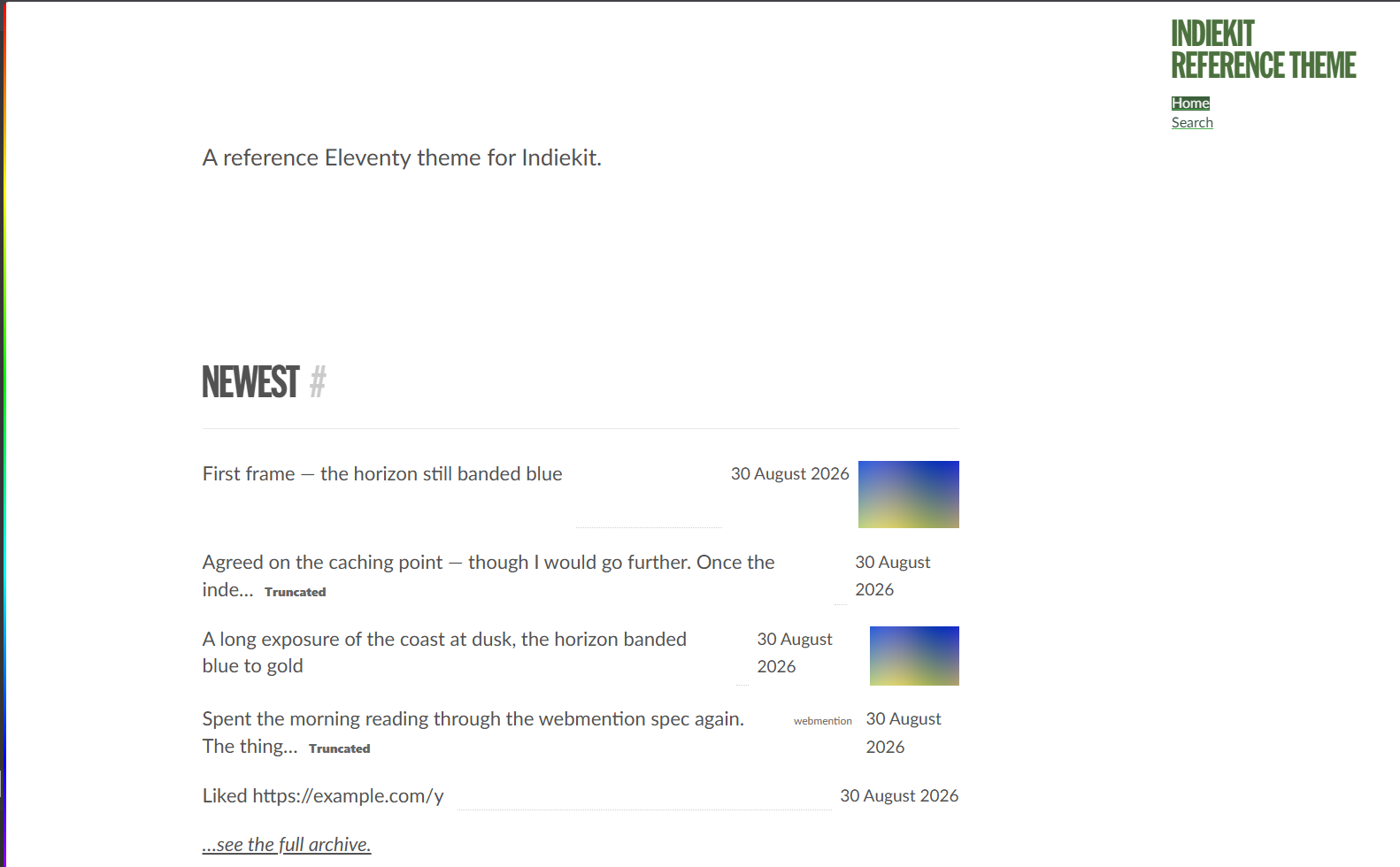
I have been working on a #Eleventy 4 theme for #Indiekit and yes I was pleasingly surprised to see it work out of the box with the current “eleventy-preset” core indiekit package (its supposed to be Eleventy 3.x.x) My inspiration was onbviously Zach Leatherman own Eleventy 4 theme
-
https://www.interconnects.ai/p/glm-53-how-chinese-labs-keep-stridePermalink
Not sure I can run this on a DGX Spark GB10 but 5.2 is already impressive
-
AI: T3
The AS/400 Revolution: “The System is the Solution” 🖥️
The AS/400 (introduced in 1988) was revolutionary because it was one of the first systems to integrate the hardware, operating system, and database into a single box — way before that became a common concept. IBM’s “The System is the Solution” campaign was one of the most successful in computing history, and the platform lasted so long that it was rebranded as IBM i in 2008, yet still actively used in thousands of businesses worldwide in the 2020s.
Even more impressive? RPG, which was created in the 1960s, is still in active use today — making it one of the longest continuously used programming languages in history. Many companies still rely on RPG programs written 30-40 years ago that continue to run flawlessly on IBM i systems.
-
There are at least two obvious ways to imagine Donald Trump trying to remain president after 2028. The first is the constitutional loophole: someone close to him — perhaps one of his children — runs for president with Trump as vice president, wins, t...
Read more → AI: T1 -
Dreaming about a Chromium/Firefox extension that auto open any article on the web in reading mode.
Wanting to see the original site would be a manual action.
No ads, no pop-ups, no cookies walls, just plain text,titles and basic images.
Reading on mobile without reading mode On for most news sites is such a pain in the A’s, it’s horrible what they have done with the Web.
Thank God the blog ecosystem is clean, fast and un tarnished by these shenanigans.
What bothers me even more is Google actively pushing scammy, dirty sites on its News pan on every Android devices shipped, Google is curating “News” sites filled with Ads, Scams and deep redirect that actively drive the user to even more scammy site is literally automated enshitification.
It’s horrible to browse the web on mobile in 2026, we gotta to do something!
-

 interconnects.ai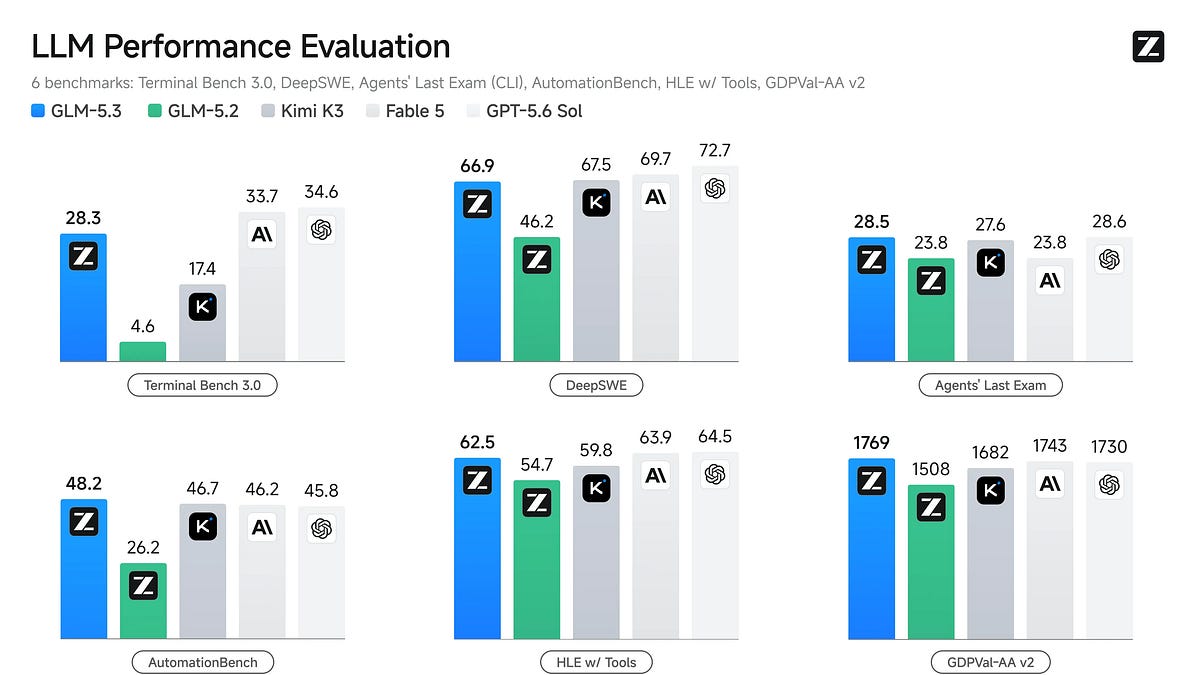
 rsc.rmdes.be